.svg)
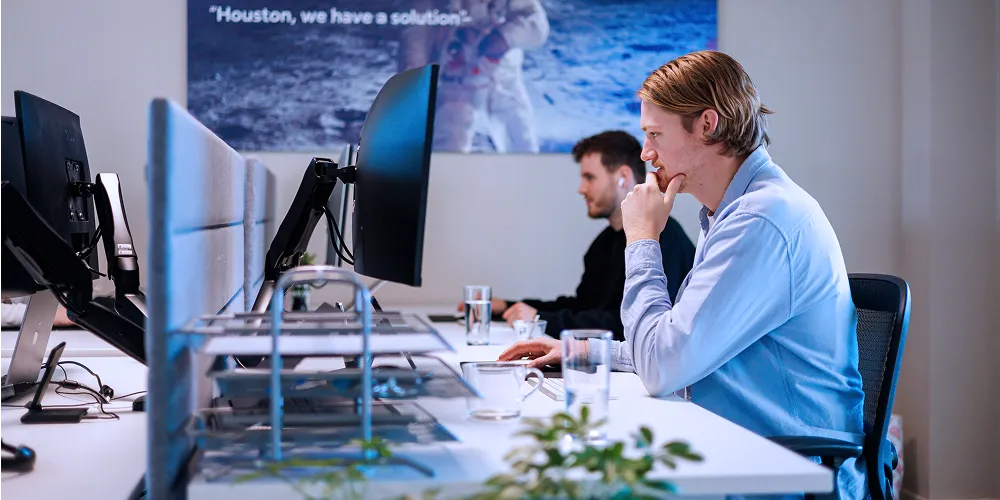
Many teams work hard, but still lose time along the way on all kinds of small things.
The day fills up quickly, calendars are packed, tasks keep piling up, and somehow it still feels like the real work gets pushed aside. Not because people are not doing enough, but because too much time disappears into small manual actions, disconnected systems, and unnecessary friction.
And that is usually where things start to go wrong.
Not in the big strategic decisions, but in the day-to-day operation. In the constant switching, chasing updates, searching for context, and trying to figure out what should be the priority right now. That takes energy. And above all, it takes time.
In many organisations, lost time hides in recurring tasks.
A status update here. A CRM field there. Processing notes after a meeting. Asking a colleague for context. Looking for that one document again. On their own, these tasks seem small. Together, they quietly take over a large part of the workday.
There is another issue too. Work has become fragmented. Planning lives in one tool, customer information in another, notes are scattered, and action points are buried in chats or stuck in someone’s head. That means people are not just doing the work, they are constantly trying to piece the work together.
That slows everything down. And makes work more frustrating than it needs to be.
If your team constantly feels short on time, working harder is rarely the answer. Hiring more people is not always the answer either.
In many cases, the biggest gains come from organising work more intelligently. Less manual effort. Less switching. Fewer loose ends. More clarity, more focus, and faster execution.
That is where Aurora comes in.
Aurora is Moonly’s AI teammate, built to help teams organise work more efficiently and take repetitive tasks off their plate. Not as just another chatbot, but as an assistant that works within the context of your organisation.
That means Aurora does more than answer questions. It helps surface information, prepare work, highlight actions, and speed up routine tasks that would otherwise eat into your day.
Aurora mainly helps teams in three ways.
Recurring actions often take up more time than people realise. Think of summarising, structuring, drafting, following up, or collecting information. Aurora helps speed up this kind of work, and in many cases can take part of it off your hands.
A lot of delay comes from information being spread across different places. Aurora brings relevant context together, so people spend less time searching and more time moving forward. That saves time and helps prevent avoidable mistakes.
Instead of gathering everything manually, your team can use Aurora to move straight to the next step. For example, by creating a summary, preparing an update, pulling action points from a meeting, or collecting input for a customer request.
That leaves more time for the work where people actually add the most value.
The biggest gain is not just efficiency. It is also peace of mind.
When your team spends less time on repetitive tasks and less energy switching between systems, space opens up. Space to think more clearly, prioritise better, and do the work with more care.
You notice that in collaboration, in the quality of the work, and ultimately in the results.
If a team constantly feels short on time, that does not automatically mean people are falling short. More often, it is a sign that the way work is organised can be improved.
That is where AI can add real value. Not by replacing people, but by removing unnecessary friction from the workday.
Aurora was built to make that practical. Not as a vague promise about the future, but as direct support for the work teams need to do today.
Then the first step is getting clear on where the friction is. Which tasks take up too much time? Where does duplicate work happen? And where do people lose context?
Aurora helps turn those insights into action, so your team can work faster, with more clarity and less unnecessary hassle.
Want to see what that looks like in practice? Request a demo.

From strategic thinking to hands-on development, we turn vision into reality.
.svg)


.png)
.svg)
.svg)
.svg)